
August 6, 2026
Key Takeaways
- The first ten minutes after a tree falls on your house matter more than almost anything that follows, and they’re mostly about safety, not cleanup.
- Never attempt to move a fallen tree or limb yourself, especially if it’s touching power lines or resting on a compromised roofline.
- Photo documentation before anything is moved is one of the most important steps for a smooth insurance claim.
- A tree that has fallen on a structure requires a specialized emergency response, not a standard removal appointment.
- Knowing who to call first, your emergency services or your tree company, can change the outcome of the entire event.
It happens fast. A gust of wind, a crack, and suddenly there’s a tree resting on your roof, your porch, or your car. In that first minute, most homeowners feel some combination of shock and the urge to go outside and start dealing with it. That instinct, while understandable, is exactly the wrong one. What you do in the first hour after a tree falls on your house has a real effect on your safety, the extent of the damage, and how smoothly your insurance claim goes. Here’s the order of operations that actually protects you.
What Happens When a Tree Falls on Your House
A fallen tree on a home is one of the more disorienting emergencies a homeowner can face, because the danger isn’t always obvious from the ground. A tree that looks like it’s simply lying across the roof may actually be under tension, resting on a cracked rafter, or leaning against a live power line. Working through the situation methodically, rather than reactively, is what keeps a bad night from becoming a dangerous one.
Step 1: Get Everyone Out and Account for Them
Before anything else, make sure every person and pet in the house is accounted for and away from the area directly beneath the damage. If the tree has broken through a ceiling or wall, treat the room below and any adjoining rooms as off-limits until the structure has been assessed. Trees that fall in a storm often continue to shift for minutes or hours afterward as wind and rain move the canopy, so distance is your best protection.
Step 2: Check for Power Lines and Gas Lines
Look, but don’t touch, for downed power lines anywhere near the tree, the yard, or the point of impact. A tree limb resting on a line, or a line pulled loose from the house, should be treated as energized until a utility crew confirms otherwise. If you smell gas or hear a hissing sound near the foundation or a gas meter, leave the property immediately and call your gas utility from a safe distance. These two checks come before anything involving the tree itself.
Step 3: Call 911 If There’s Immediate Danger
If anyone is injured, if a power line is down and touching the structure, or if the damage has compromised a load-bearing area with people still inside, call 911 first. Emergency responders are trained to secure a scene involving structural and electrical hazards together, which is not something a homeowner or even a tree crew should attempt without that coordination.
Step 4: Document the Damage Before Anything Moves
Once everyone is safe, take photos and video from multiple angles, the tree, the point of impact, the surrounding yard, and any visible interior damage. Do this before any branches are cut or debris is cleared. Insurance adjusters rely heavily on this early documentation, and it’s far easier to capture an accurate record in the first hours than to reconstruct it later. Include wide shots that show the tree’s size and angle, not just close-ups of the damage itself.
Step 5: Call Your Tree Service for Emergency Response
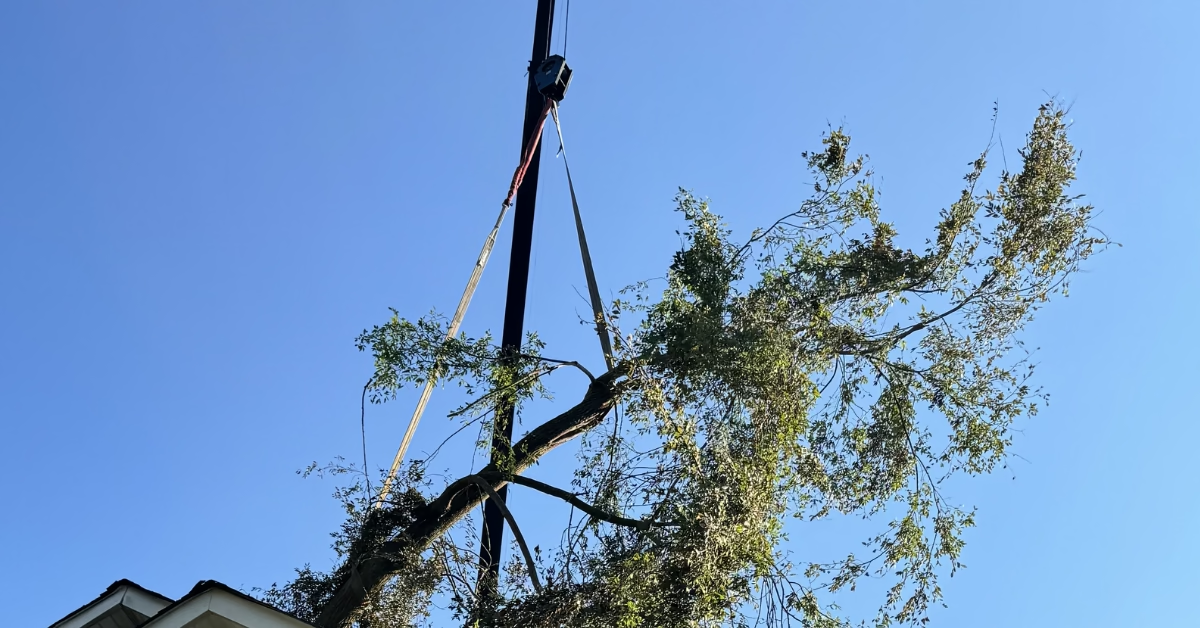
This is different from scheduling a routine removal. A tree resting on a home needs a crew experienced in structural stabilization, someone who understands how to assess whether the tree itself is adding weight and pressure that could worsen the damage if disturbed incorrectly. An emergency response crew will typically stabilize the tree first, sometimes using cabling or cribbing to prevent further movement, before any cutting begins. Trying to have a general contractor or a homeowner attempt this step is one of the more common ways a bad situation becomes worse.
Step 6: Call Your Insurance Company
Most homeowner’s policies cover tree removal and structural repair when the damage results from a storm, though coverage details vary. Report the incident as soon as it’s safe to do so, and be ready to share your documentation. Ask specifically whether your policy requires you to use an approved contractor list or whether you can choose your own tree service and repair contractor, since this varies by insurer.
Step 7: Tarp and Temporary Protection
Once the tree has been safely removed or stabilized, the exposed area of the roof or wall needs to be protected from further weather, particularly rain intrusion, which can cause damage well beyond the original impact. An experienced tree service firm in South Carolina can provide emergency storm response, secure the damaged area with temporary tarping, and coordinate with a roofing contractor for permanent repairs.
Step 8: Full Structural Assessment
Even after the tree is gone and the immediate opening is protected, it’s worth having both a structural contractor and your tree company confirm there’s nothing left behind that could cause a second problem, a cracked rafter that’s still under load, a nearby tree with a weakened root plate from the same storm, or debris caught in gutters and valleys that will trap water.
Why Timing Matters So Much
The gap between a tree falling and a professional response being on site is where most secondary damage happens. Rainwater finds its way into an open roof section within minutes, not hours. A tree that’s shifted and settled against a structure can continue to apply pressure that widens an existing crack. And a homeowner who climbs onto a damaged roof to “just take a look” is one of the more common sources of injury after a storm, more than the falling tree itself in many cases. An emergency response that moves through safety, documentation, and stabilization in the right order avoids most of these compounding problems.
What Not To Do
A few instincts are worth resisting at the moment.
- Don’t attempt to cut or move any part of the tree yourself, even a smaller limb, since fallen trees are often under more tension and weight distribution than they appear.
- Don’t assume a power line is dead because the power is out in your house; lines can still be energized from a different source.
- Don’t wait to call for help because it’s late at night or the storm hasn’t fully passed; a tree resting on a structure is not a problem that improves by waiting.
At Warrior Tree Service, emergency response to a fallen tree is treated as its own category of work, not a same-day version of a standard removal. Our crews are equipped to assess structural risk, coordinate around downed lines, and stabilize a tree before any cutting begins, so the situation doesn’t get worse while help is on the way.
We work directly with homeowners and, when needed, alongside insurance adjusters and repair contractors to keep the process moving without added stress. If a tree has come down on your home, call our team right away at – (864) 660-7995 for immediate emergency assistance.
Frequently Asked Questions About a Tree Falling by the Homeowners in Chesnee, SC
Is it safe to go inside my house if a tree has fallen on the roof?
Avoid the room directly under the damage and any adjoining space until a professional has assessed the structure. A tree resting on a roof can continue to shift and put pressure on damaged framing.
Will my homeowner’s insurance cover a tree falling on my house?
In most cases, storm-related tree damage to a structure is covered, though the specifics depend on your policy. Contact your insurer as soon as it’s safe and keep your documentation ready.
Should I call a tree service or a roofer first?
Call your tree service first if the tree is still on the structure, since it needs to be safely removed before a roofer can properly assess or repair the damage underneath.
What if the tree is touching a power line?
Stay well away from the tree, the yard area near it, and anything the line is touching, and contact your utility company and 911 immediately. Don’t attempt to move any part of the tree until the line has been confirmed safe.
How quickly can emergency tree removal happen after a storm?
Response times vary based on storm severity and regional demand, but most tree companies prioritize situations where a tree is actively resting on a structure. Calling as soon as it’s safe to do so gets you into the queue faster.
Summary Checklist: What to Do When a Tree Falls on Your House
| Step | Why It Matters | Action |
| Account for Everyone | Reduces the risk of injury if the tree or structure shifts again. | Move everyone to a safe location away from the impact area. |
| Check for Power and Gas Hazards | Downed power lines and gas leaks are the most immediate dangers. | Look for hazards without touching anything and leave immediately if you smell gas. |
| Call 911 if Needed | Ensures emergency responders can address immediate life-safety hazards. | Call immediately if anyone is injured or power lines are involved. |
| Document the Damage Before Moving Anything | Provides evidence for your insurance claim. | Take clear photos and videos from multiple angles. |
| Call an Emergency Tree Service | Prevents dangerous DIY removal attempts. | Request emergency stabilization and professional tree removal. |
| Contact Your Insurance Company | Starts the claims process as quickly as possible. | Report the damage promptly and provide your documentation. |
| Protect the Exposed Structure | Helps prevent additional water and weather damage. | Install temporary tarps or protective coverings if it is safe to do so. |
| Schedule a Full Inspection | Identifies hidden structural damage and additional tree hazards. | Arrange for both a structural inspection and a professional arborist assessment. |
Final Advice
A tree falling on your house is one of the more stressful things a homeowner can face, but the outcome depends heavily on the order you handle things in. Safety first, documentation second, professional stabilization and removal third, and insurance coordination throughout. Rushing any of these steps, or trying to shortcut them without professional help, is where most of the secondary damage and injuries come from. If it happens to you, stay calm, stay clear of the damage, and call Warrior Tree Service at (864) 660-7995 for immediate emergency assistance.


