
August 11, 2026
Key Takeaways
- Tree stumps attract termites because decaying wood provides a steady food source and a moist environment for colonies to thrive.
- Carpenter ants are drawn to rotting stumps because softened, damp wood is ideal for building nests, even though they don’t eat the wood.
- Old tree stumps also encourage fungal growth, insects, and other pests that can spread throughout your yard.
- Spartanburg’s warm, humid climate speeds up wood decay, making leftover stumps especially attractive to termites and other pests.
- Removing or grinding a tree stump helps eliminate the conditions that attract wood-destroying insects and reduces the risk of future yard problems.
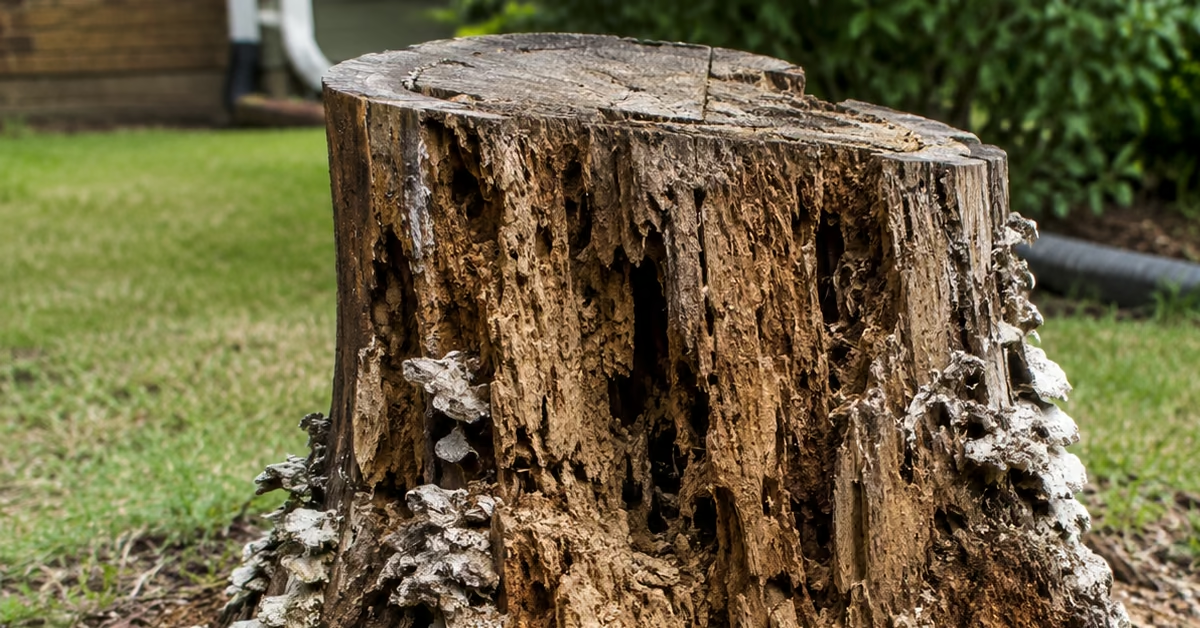
A stump left behind after a tree removal can seem harmless, just a low, flat piece of wood slowly weathering in the yard. But that stump is doing more than sitting there. It’s decaying from the inside out, and decaying wood is exactly what termites, carpenter ants, and several types of destructive fungi are looking for. In Spartanburg’s warm, humid climate, that process moves faster than most homeowners expect, and it doesn’t always stay contained to the stump itself.
Why Stumps Become Pest Magnets
When a tree is cut down, the roots and stump left in the ground don’t die immediately. They begin a slow decay process that can take anywhere from several years to over a decade, depending on the species and conditions. During that time, the wood becomes progressively softer, moister, and more attractive to a range of pests that specifically target decaying cellulose. What starts as a minor nuisance in the yard can, over time, become a staging ground for problems that eventually reach the house.
Termites Are the Biggest Long-Term Risk
Subterranean termites, the species most common in South Carolina, live underground and travel through soil to reach food sources, which is exactly what a decaying stump provides. A stump doesn’t just feed the termites already living near it, it can actively attract a colony that was previously somewhere else in the yard. Once established, that colony doesn’t necessarily stay put. Subterranean termites build mud tubes to travel between food sources, and a stump within reach of your home’s foundation can become a stepping stone the colony uses to eventually reach structural wood. This is one of the more underappreciated risks of leaving a stump in place, especially one located close to the house.
Carpenter Ants Use Stumps as Staging Colonies
Unlike termites, carpenter ants don’t eat wood, they excavate it to build nests, and a decaying stump with softened wood is close to ideal. Carpenter ants often establish what’s known as a satellite colony in an old stump, using it as a base while foraging for food elsewhere in the yard. Over time, particularly if the stump is near the home, that satellite colony can expand or a portion of the colony can relocate into moisture-damaged wood on the structure itself, such as around a leaking gutter or a rotting fascia board. A stump doesn’t need to be touching the house to contribute to this risk.
Fungal Decay Accelerates the Whole Process
As a stump breaks down, it’s colonized by wood-decay fungi that soften the wood further and create the moist conditions that pests prefer. Some of these fungi, like Armillaria, can also spread through root contact to nearby healthy trees, meaning an old stump can become a source of disease for other landscape trees in addition to attracting insects. In Spartanburg’s humid summers, this decay process happens noticeably faster than it would in a drier climate, which shortens the window before a stump becomes a genuine pest concern.
Other Yard Problems Stumps Create
Beyond termites and carpenter ants, an old stump creates a handful of secondary issues. It’s a common spot for standing water to collect after rain, which adds mosquito breeding to the list of concerns. Stumps also interfere with mowing and landscaping, and the underground root system can continue sending up small shoots for years, creating ongoing maintenance work. None of these are as serious as a pest infestation, but they add up.
Why Spartanburg’s Climate Speeds Up the Timeline
Upstate South Carolina’s combination of hot, humid summers and relatively mild winters means the fungi and insects responsible for wood decay rarely get a long dormant period to slow them down.
- In a colder climate, a stump might sit through several months of hard freeze each year, which meaningfully slows both fungal growth and insect activity.
- In Spartanburg, that pause is much shorter, if it happens at all in a given winter, which means the decay clock keeps running for more of the year. This is part of why a stump that might sit for a decade without causing problems in a drier or colder region can become a genuine concern within just a few years locally.
The Species Common to Spartanburg Yards Matter Too
Not every tree species decays at the same rate once it’s been cut.
- Softer woods, like pines and some fast-growing hardwoods common in Upstate landscaping, tend to break down faster and become attractive to pests sooner than denser hardwoods like oak.
- If your stump came from a pine or a fast-growing shade tree, it’s worth treating the timeline a little more urgently than you might for a slower-decaying species, simply because the wood is softening and becoming more hospitable to termites and ants at a quicker pace.
How Close Is Too Close?
There’s no universal number, since it depends on soil conditions, the tree species, and the specific pest, but general pest control guidance treats stumps within roughly 20 to 30 feet of a structure as a meaningfully elevated risk, particularly for termites, which can travel that distance through soil without much difficulty. A stump at the back edge of a large property carries less urgency than one near a foundation, porch, or crawl space vent, though neither is risk-free over a long enough timeline.
What Removal Actually Solves
Stump grinding removes the visible stump and grinds it down below grade, but a thorough job also addresses the larger root system, since decaying roots underground can continue to host termite activity even after the surface stump is gone. This is part of why working with an experienced & reliable tree service firm in South Carolina that grinds deep enough and clears root debris matters more than it might seem. A stump that’s simply cut flush with the ground, without addressing the root mass, still leaves much of the decaying wood in place.
Signs an Existing Stump May Already Have a Pest Problem
A few signs are worth watching for if you already have a stump on the property:
- Soft, crumbly wood that gives way easily when pressed
- Small piles of sawdust-like material near the base (a sign of carpenter ant excavation)
- Visible fungal growth, or mud tubes running along the stump’s surface or nearby soil.
Any of these are worth having assessed before the problem has a chance to spread toward the house.
At Warrior Tree Service, stump removal is about more than clearing a yard, it’s about eliminating a long-term pest and decay risk before it becomes a bigger problem. Our team grinds stumps below grade and clears the surrounding root mass, so there’s no lingering wood left to attract termites, carpenter ants, or fungal decay.
If you have an old stump on your Spartanburg property, especially one near your home, we can assess it and recommend the right approach. Call our team at (864) 660-7995 to Book Your Free Estimate !!
Frequently Asked Questions About Stumps and Pest Problems in Spartanburg, South Carolina
How long does it take for a stump to attract termites?
It varies by species and conditions, but decay-loving pests can begin colonizing a stump within one to two growing seasons, sooner in Spartanburg’s humid climate than in drier regions.
Can a stump attract termites even if it’s not touching my house?
Yes. Subterranean termites travel through soil and can be drawn toward a home from a stump located a good distance away, especially once an established colony begins foraging outward.
Is stump grinding enough to prevent a pest problem, or do I need pest control too?
Stump grinding removes the wood source, which is the most important long-term step, but if pests are already active, a pest control professional should treat the area directly.
What’s the difference between stump grinding and stump removal?
Grinding breaks the stump down below the surface using specialized equipment, while full removal extracts the stump and major roots entirely. Grinding is usually sufficient for eliminating the decay and pest risk.
Should I be worried about a stump that’s been in my yard for years without any problems?
Even a stump that hasn’t caused visible issues yet can still be a risk, since decay and pest colonization aren’t always obvious from the surface. Having it assessed is a reasonable precaution, particularly if it’s close to the house.
Summary Checklist: Stumps and Pest Risk in Spartanburg, SC
| Pest or Issue | Why the Stump Attracts It | What Helps |
| Subterranean Termites | Decaying wood and soil access provide food and a travel route. | Grind the stump and root mass below grade. |
| Carpenter Ants | Softened wood provides suitable material for satellite colonies. | Remove the wood source entirely. |
| Wood-Decay Fungi | Moist, decaying wood provides an ideal growth medium. | Address stumps before extensive fungal colonization. |
| Standing Water and Mosquitoes | Stump depressions can collect rainwater. | Grade and remove the stump area. |
| Ongoing Root Sprouts | Living root systems can continue sending up shoots. | Full grinding disrupts root regrowth. |
Final Advice
An old stump rarely looks like a serious problem, which is exactly why it tends to get overlooked. But in a climate like Spartanburg’s, where humidity and mild winters favor both insects and fungal decay, that stump is doing quiet work in the background, softening, decaying, and potentially inviting pests that don’t stay contained to the yard. Addressing a stump sooner rather than later is a small step that avoids a much larger one down the road.
Many Spartanburg properties, especially older ones that have lost several trees over the years to storms, disease, or simple age, end up with more than one stump scattered around the yard. Each additional stump is its own independent food source and potential colony site, so a property with three or four old stumps isn’t just facing a slightly bigger version of the same risk, it’s facing several separate points where a termite colony or carpenter ant nest could establish itself. Addressing all of them at once, rather than one at a time as they happen to get noticed, is generally the more efficient and effective approach. Call our team at (864) 660-7995 to Book Your Free Estimate !!


